Independent · cited · trilingual
Spondylothoracic dysostosis: small chest, normal mind, fighting for room to breathe.
STD is the more severe of the two conditions once called Jarcho-Levin syndrome. This page walks through what the fused ribs mean for breathing, what chest wall surgery can and cannot do, and what the genetics mean for your family.
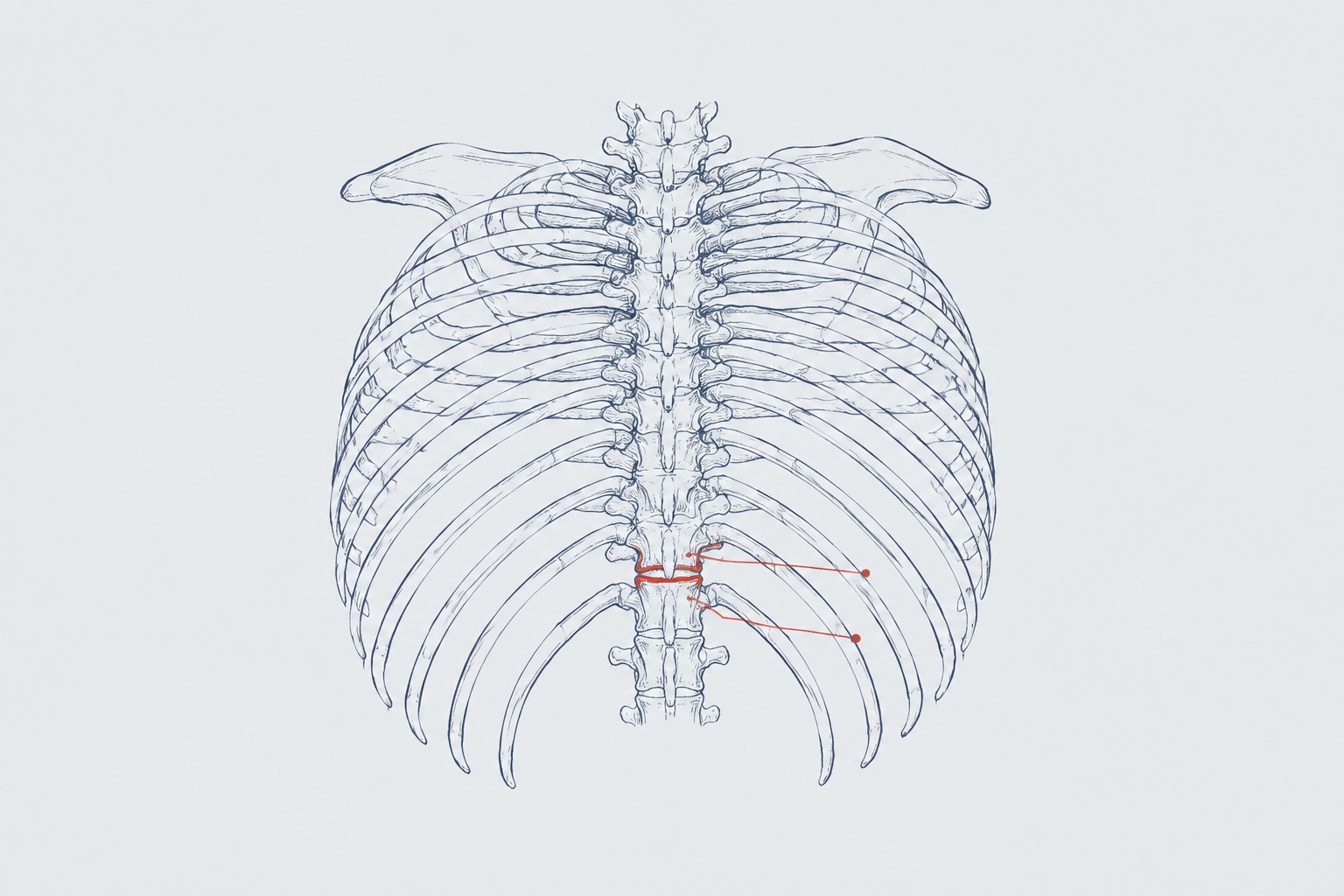
Short answer: in spondylothoracic dysostosis the ribs fuse where they meet the spine on both sides, so the chest is small and stiff from birth. The main medical challenge is breathing in infancy; intellect is typically normal. With modern neonatal respiratory care and, for some children, surgical chest wall stabilization, many more babies survive today than older statistics suggest. NORD; Ochsner Journal; CHOP Thoracic Insufficiency Syndrome Center
What the name means.
Spondylothoracic dysostosis is sometimes called spondylothoracic dysplasia or Lavy-Moseley syndrome. "Spondylo" refers to the spine, "thoracic" to the chest. The defining feature is visible on a front-facing X-ray: the ribs fan out from the spine and fuse close to it on both sides, which radiologists compare to a crab shell. The chest wall cannot grow the way it should, which is why breathing, not the spine itself, is usually the first concern.
What families usually notice first.
Many families first hear the name after a prenatal ultrasound shows short or crowded ribs and vertebral irregularities in the second or third trimester. Others meet it in the neonatal intensive care unit, when a newborn works harder to breathe than expected. A smaller-than-expected chest, a short trunk, and distinctive neck-to-pelvis spine fusion on imaging are the classic findings that trigger genetic workup.
Breathing: the main battleground.
Because the rib cage is small and rigid, the lungs have less room to grow and the chest wall moves less with each breath. In the first months, some infants need support ranging from supplemental oxygen to ventilation. The medical term for the underlying problem is thoracic insufficiency syndrome: the chest cannot support normal breathing or lung growth. Pediatric centers specializing in chest wall disorders track lung function and chest growth closely in the first years.
Surgery that changes the shape of childhood.
For children whose chest cannot grow adequately, centers may offer surgery to expand and stabilize the thorax. The best known approach, VEPTR (vertical expandable prosthetic titanium rib), places devices alongside the spine and ribs that are lengthened every several months as the child grows, buying the lungs room to develop. It is major surgery undertaken at specialized centers, and candidacy is an individual decision for the treating team. Adults who received these rods as children describe them as transformative for breathing and posture.
Genetics and the Puerto Rican connection.
STD is most often autosomal recessive: both parents carry one changed copy of a gene, classically DLL3, and each pregnancy has about a one-in-four chance of being affected. The condition has a recognized founder effect in Puerto Rico, where families trace ancestry to a small set of founders. If your family has Puerto Rican heritage and a history of infant chest or spine problems, genetic counseling can clarify whether the family mutation is known and what testing is available.
Questions worth bringing to appointments.
- Is the chest wall affecting breathing now, or is the risk mainly about lung growth over time?
- Should we be referred to a center with thoracic insufficiency syndrome experience?
- What genetic testing would confirm STD versus SCD in our child?
- What does the first year of monitoring look like if we go home without surgery?
Reading older statistics. Case series from decades past reported high infant mortality, but they concentrated on the sickest hospitalized children, often before modern neonatal respiratory support and before chest wall surgery was available. They describe an era, not necessarily your child. Ochsner Journal case series; NORD